


Using Feelings Charts to Teach Emotions
June 2, 2026
Parent Resources
Social-Emotional Learning
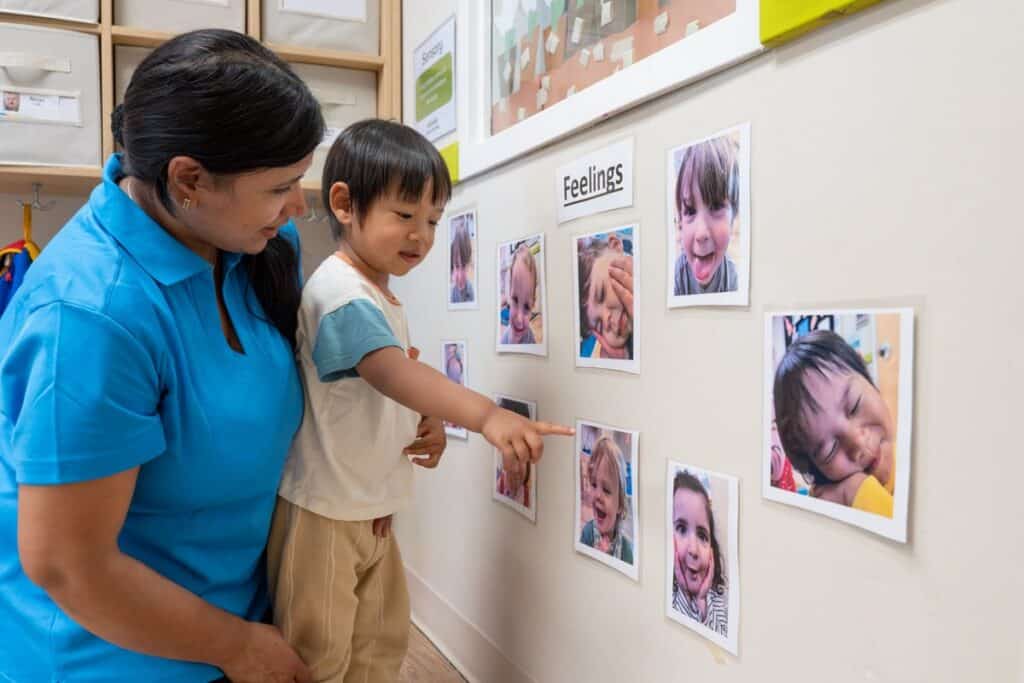
Helping young children understand their emotions is one of the most important parts of early development. But for toddlers and preschoolers, big feelings often show up before the words do. When a child is overwhelmed, expecting them to calmly explain what’s wrong is a lot like asking them to do calculus—their developing brains just aren’t wired for it yet!
That’s where feelings charts can help. They give children a simple, visual way to point to what they’re experiencing when they don’t yet have the words to say it.
What Exactly Is a Feelings Chart?
A feelings chart is a simple visual tool that displays different emotions using clear, relatable images. Think of it as a colorful menu of moods!
Instead of just words, a good feelings chart uses illustrations, cartoons, or real photos of children’s faces showing various expressions, like a wide smile for happy, a trembling mouth for scared, or crossed arms and a pout for mad. By pairing a visual cue with an emotion word, we bridge the gap between what a child feels in their body and the language they need to express it.
How to Use a Feelings Chart
Step 1: Practice During Calm Times First
Before trying to use a feelings chart when emotions are high, practice using one during happy, relaxed moments. By normalizing the chart during peaceful moments, your child learns how to use the tool without any emotional pressure. You might say during breakfast: “I’m feeling happy today because the sun is shining. Let’s look at the chart—how are you feeling today?”
Helpful tips for use:
- Location: Keep the chart somewhere visible and at your child’s eye level, like on the fridge, a bedroom door, or in a play area. Or, have a portable chart that’s easily accessible so you can bring it to your child when big feelings rise. We’ve linked a great feelings chart that you can try at home. Click here!
- Make it a daily ritual: Check in with the chart during natural transition times, like at breakfast or before bed.
- Model it yourself: Children learn best by watching us. When you are experiencing changing emotions, show them! “Mommy is feeling a little tired right now, so I’m going to point to the tired face on our chart.”
- Play games with it: Make it fun! Ask your child, “Can you make a face that looks like this silly picture?” or “What face do you think the puppy in this storybook is feeling right now?”
Step 2: Using the Chart When Emotions are High
Once your child is familiar with the chart, it becomes a powerful tool when emotions rise. At this age, emotions spike quickly when a toy gets taken away, a block tower falls, or it’s time to leave the playground. In these moments, it’s hard for young children to think clearly or use language to explain what they feel.
Here is a step-by-step example of how to use the chart in the heat of the moment:
The Block Tower Collapse – Your three-year-old just spent twenty minutes building a masterpiece, only for a stray elbow to knock it all down. Cue the screaming, crying, and foot-stomping.
- Coregulate: Before you even mention the chart, lower your body to their eye level and take a deep breath. Your calm energy helps soothe their panicked nervous system.
- Introduce the visual: Once your child begins to settle, gently bring over the feelings chart or guide them toward it. Instead of asking lots of questions right away, start simple. Point to a few faces and calmly say, “Are you feeling sad?” or “Maybe frustrated?” When children are overwhelmed, simple choices are often easier to process than open-ended questions.
- Name the emotion: Point to the mad or sad face on the chart and say: “Your beautiful tower fell down. I see your body is tense. Look at this picture of the mad face. Are you feeling mad right now, or maybe sad?”
- Validate the emotion: If they point to the mad face, validate it immediately: “Yes, you are mad! It makes total sense to feel mad when something you worked hard on breaks.” By using the chart, you’re helping your child begin moving from overwhelm toward emotional awareness and connection.
The Benefits Over Time
When used consistently—practiced in calm times and applied in tough times—feelings charts support children’s development in incredible ways.
Regular use helps children:
- Build an emotional vocabulary
- Stay calmer during big feelings
- Feel seen and understood
- Practice early self-regulation
Big feelings are a normal part of early childhood, and children need support in understanding them. Feelings charts are a simple tool that makes that process easier, calmer, and more connected. Over time, they help children move from big emotions to growing emotional awareness.
At our school, we know that confident learners begin with strong social-emotional skills. By helping children understand and manage their emotions while building academic foundations, we create a balanced learning experience that supports the whole child. Contact us today to learn more!

September 15, 2026
Educational Philosophy
Parent Resources

August 13, 2026
Parent Resources
Social-Emotional Learning